The Koshas Explained: Yoga's Ancient Framework for Whole-Self Healing
There is a moment in practice, and maybe you have felt it, when something shifts. The body quiets, the exhale deepens, and for just a breath or two, the noise of the day falls away. Something underneath becomes briefly, beautifully accessible.
Yogic philosophy has a name for what you are touching in those moments. It has a map for the journey inward, and a teaching that explains why some practices reach us more deeply than others.
That map, is the Koshas.
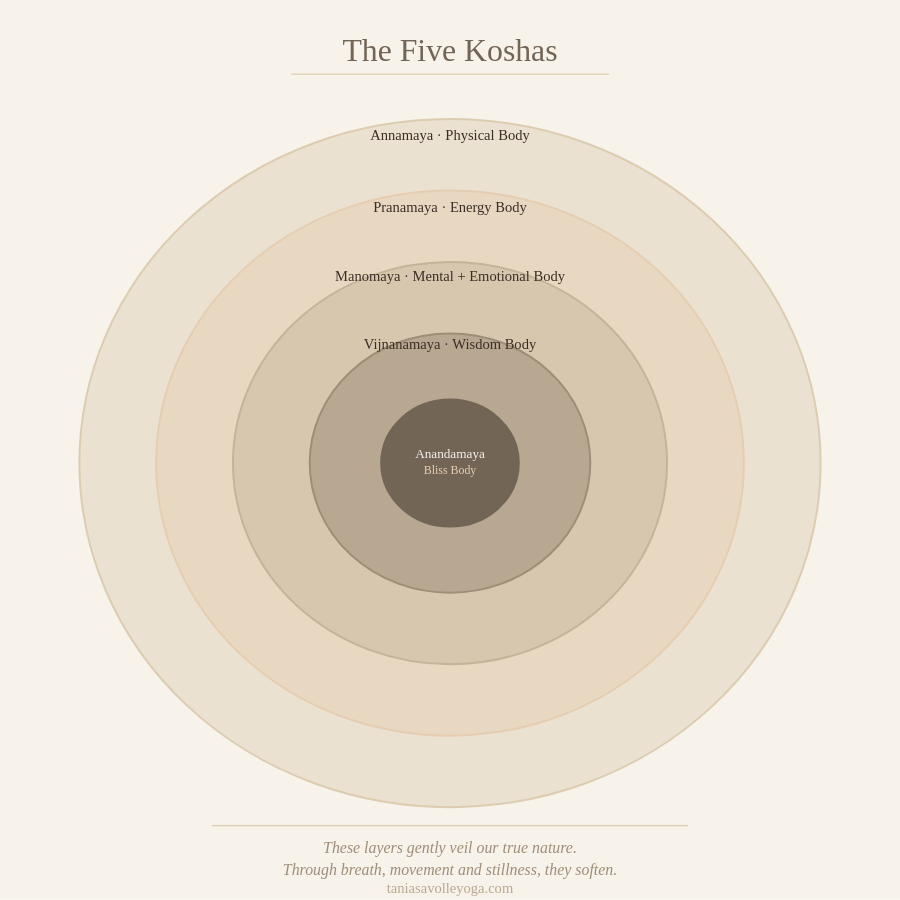
Yoga teaches that we are made of subtle layers: body, breath, mind, intuition, and bliss. Known in yogic philosophy as ‘the Koshas’, these inner dimensions gently veil our true nature. Through movement, breathwork, meditation, and stillness, we are guided inward through these layers, revealing the peace and wholeness already within.
What Are the Koshas?
The word "kosha" comes from Sanskrit and means sheath or body. The Koshas are yoga's ancient framework for understanding the full spectrum of human experience — five distinct and interconnected layers, each one subtler than the last, each one bringing us closer to our true nature.
These layers are not separate from each other. They interpenetrate and influence one another constantly. What happens in the physical body ripples into the energy body. What lives in the mind affects the breath. And when we learn to work skillfully with each layer, something begins to soften. The deeper peace that yoga teaches has always been present starts to become more accessible.
In stillness, insight rises. In breath, the body finds its way home. In nature, we remember that we have always been held.
Understanding the Koshas can change the way you relate to your practice, to your healing, and to yourself.
The Five Layers of Being
Annamaya Kosha: The Physical Body
The outermost kosha is the one we know most intimately: the body made of matter, of food, of sensation and breath. "Anna" means food in Sanskrit. This is the body that is nourished, that moves, that rests, that ages.
This is where most of us begin our yoga journey. Asana, or physical posture, works primarily with this layer. But even here, something deeper is already being addressed. When we move mindfully, when we breathe consciously, we are already beginning to reach the layers beneath.
Pranamaya Kosha: The Energy Body
Beneath the physical body lies the energy body, the layer of prana, or life force. This is the body you feel when breath moves deeply and something opens. It is what feels depleted after a draining day, or alive after time in nature.
Pranayama, breathwork, and practices that work directly with breath are the primary tools for working with this kosha. When prana flows freely, the whole system (physical, emotional, mental) tends to find greater ease. When it is blocked or depleted, we feel it everywhere.
Manomaya Kosha: The Mental and Emotional Body
The third kosha is the layer of mind and emotion: the thoughts we think, the feelings we carry, the inner narratives and patterns that shape how we experience our lives. Much of what we call stress, anxiety, and emotional weight lives here.
This is why yoga and meditation are so much more than physical practices. When we bring awareness to this layer through meditation, conscious movement, and practices that invite us to simply witness what arises, we begin to create a different relationship with the contents of our own mind.
Vijnanamaya Kosha: The Wisdom Body
Deeper still is the layer of intuition, discernment, and inner knowing. This is the part of us that senses truth before we can explain it, that guides us when we are quiet enough to listen, that knows (sometimes without words) what is right.
Most of us have learned to override this layer. To privilege logic, analysis, and external validation over the quieter knowing that lives here. Practices that cultivate stillness and presence like meditation, Yoga Nidra, and time in nature, help restore access to this layer of ourselves.
Anandamaya Kosha: The Bliss Body
The innermost kosha (the one closest to our true nature) is often translated as the bliss body. "Ananda" means bliss or joy in Sanskrit. This is not happiness as an emotion but as a state: the deep, unconditional peace and wholeness that yogic philosophy teaches is our fundamental nature.
This layer is not something we create or achieve. The layers above it simply veil it. As they soften through practice, the peace, clarity, and wisdom already present within become revealed. We do not find our way there, we remember it.
How the Koshas Support Healing
The Koshas offer something profoundly useful: a framework that helps explain why healing is not a single-track process.
We cannot think our way to peace through the mind alone. We cannot breathe our way through grief without also allowing the body to move. We cannot access our deepest wisdom while the nervous system is dysregulated. The layers are interconnected, and lasting transformation asks us to work with all of them.
This is why a yoga practice that includes not just asana but pranayama, meditation, Yoga Nidra, and conscious breathwork reaches us so differently than one that focuses on the physical alone. Each modality is a doorway into a different kosha. Together, they create something complete.
When we work across all five Koshas, the healing goes deeper. The shifts last longer. And the peace we find feels less like something we achieved and more like something we remembered.
When we slow down enough to listen, the body and breath guide us. Every time.
If you'd like to access the Koshas yourself, I created something for you.
Return to Self is a free 10-minute guided audio practice that gently moves you through each of the five layers
No mat required or prior experience necessary. Just ten minutes, your breath, and the willingness to arrive.
This is the practice I return to again and again, and I made it for moments when something in you is quietly ready to go a little deeper.
Working with the Koshas in Your Practice
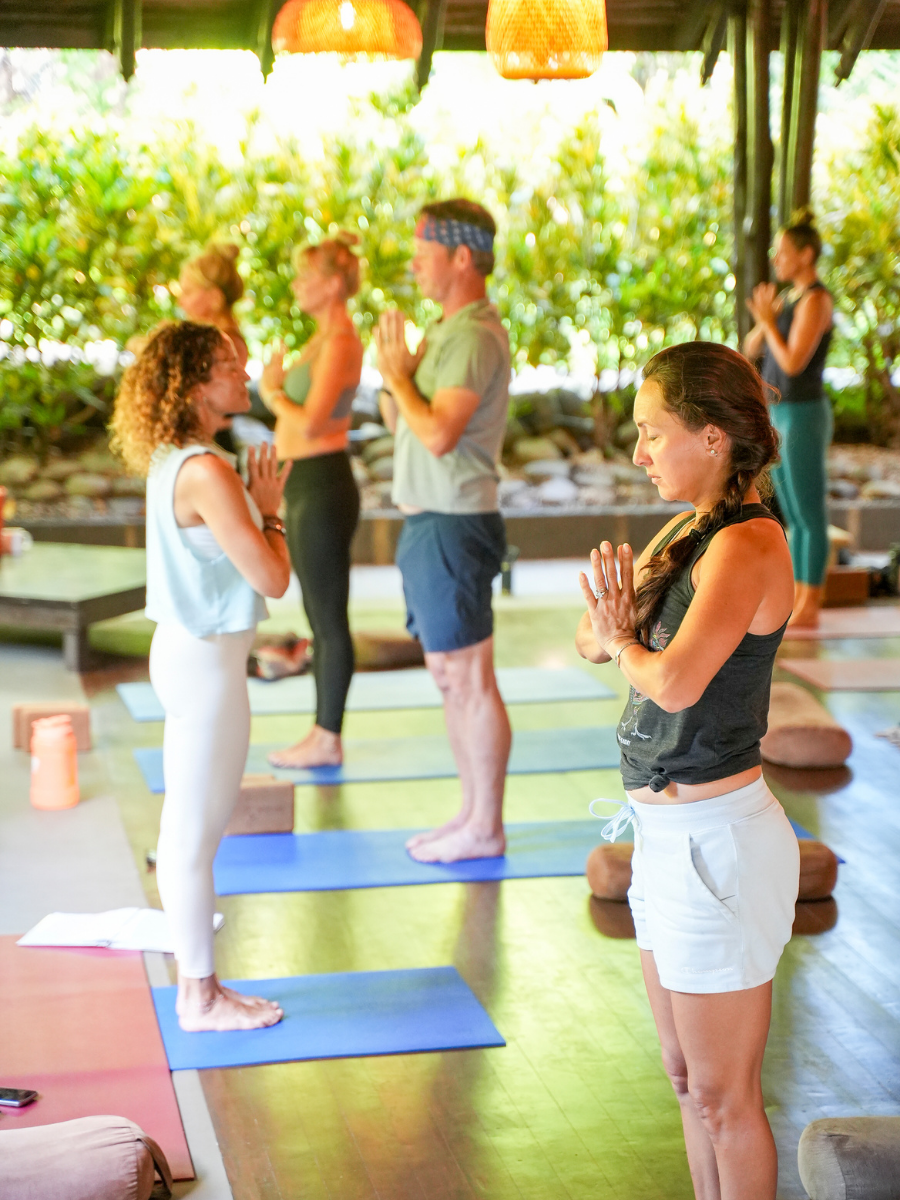
You do not need to be a scholar of yogic philosophy to work with the Koshas. You are already moving through them every time you step onto the mat.
A few ways this teaching might inform how you approach your practice:
Begin with the body. Even when you are working toward deeper stillness or emotional release, starting with physical grounding. Movement, conscious breath and sensory awareness creates the foundation the other layers need.
Let the breath be your bridge. Pranayama and breathwork are among the most direct pathways from the physical body into the subtler Koshas. When you feel stuck in your head, return to the breath.
Honor the mind without being ruled by it. Meditation is not about stopping thoughts. It is about developing a different relationship with the Manomaya Kosha, learning to witness the mind rather than be consumed by it.
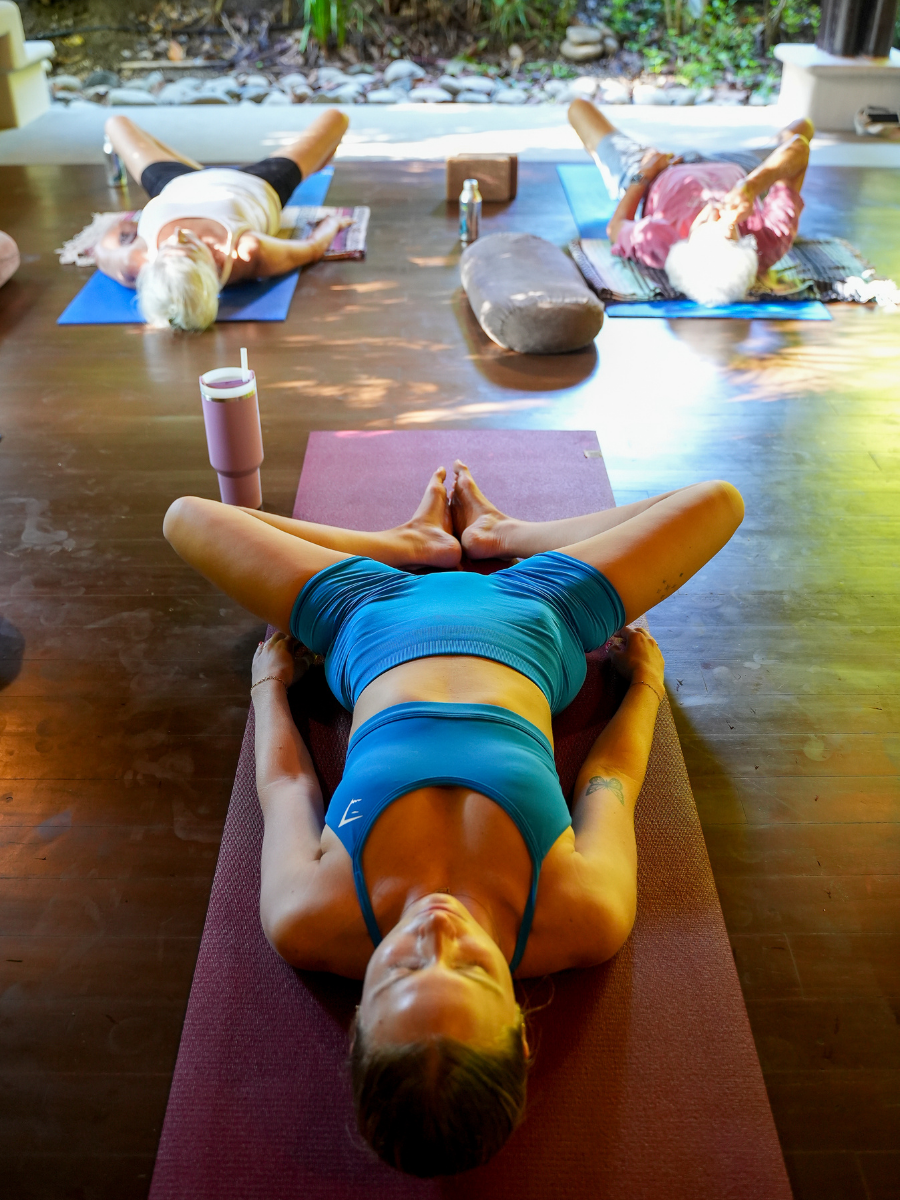
Create space for stillness. The Vijnanamaya and Anandamaya Koshas are not loudly accessed. They require quiet, spaciousness, and practices (like Yoga Nidra) that allow the more active layers to settle. Forty-five minutes of Yoga Nidra is said to be the equivalent of four hours of deep sleep. In that depth of rest, something opens.
Trust what arises. The wisdom body already knows. Part of the work is simply learning to listen.
The Koshas Will Guide Our Return to Bliss
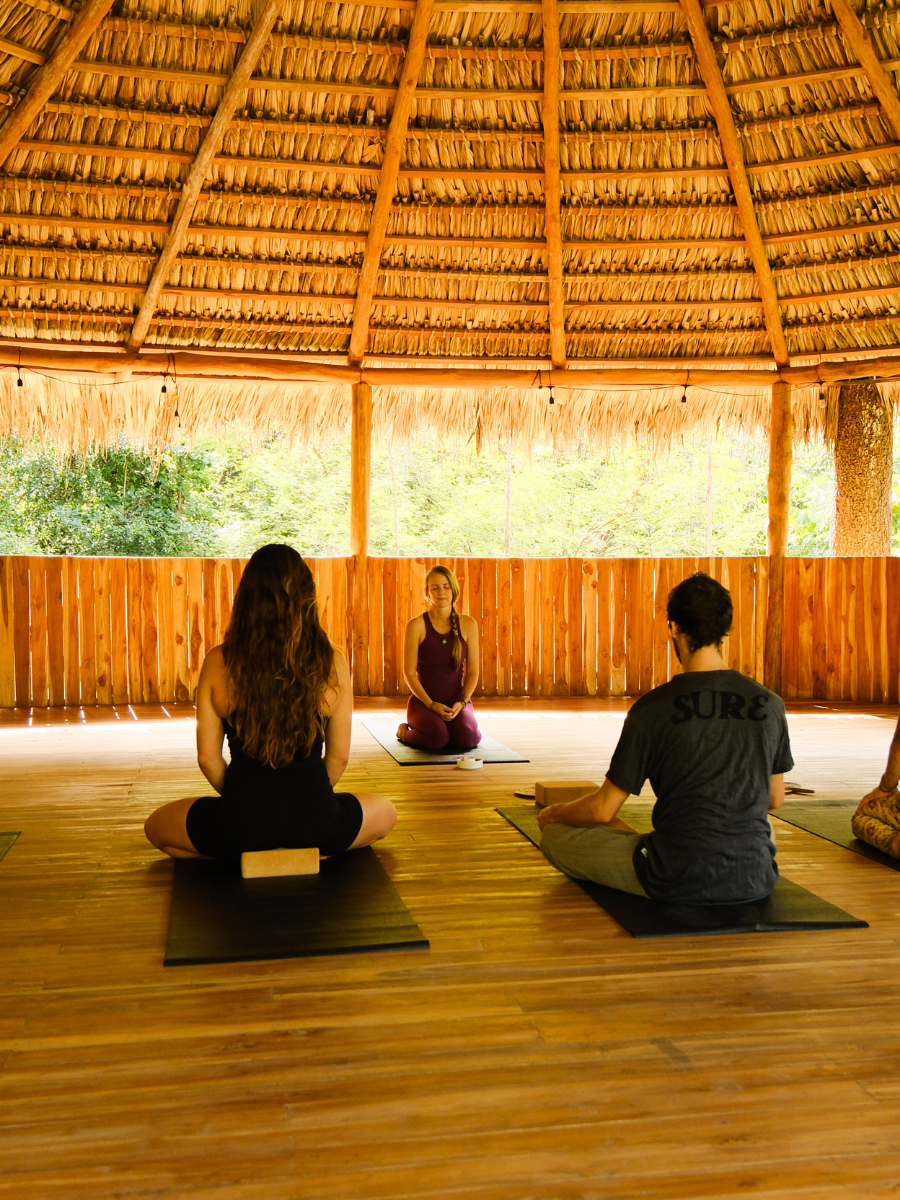
The Koshas are not only a personal practice framework, they are the philosophical foundation of the Return to Bliss yoga retreat in Costa Rica, a seven-day immersive experience co-facilitated by myself and ceremonial guide Kimberly Ocana at Ananda Lodge in Playa Grande.
The retreat is intentionally designed so that each day moves participants progressively through a different kosha. We start with the physical body on Day 1, moving through the energy body, the mental and emotional body, and the wisdom body, arriving at the Anandamaya Kosha on the final day.
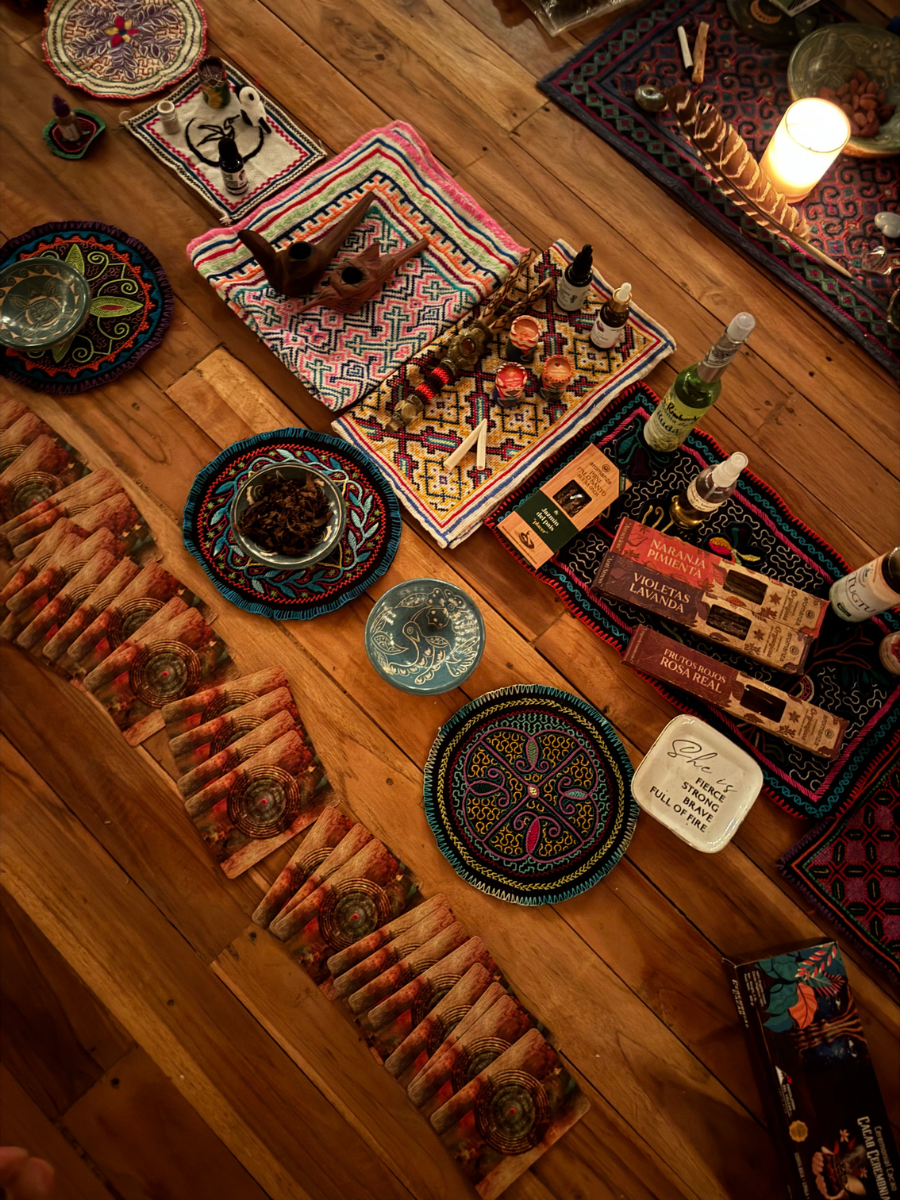
Every modality woven throughout the Costa Rica retreat: yoga, Elemental Rhythm Breathwork, Yoga Nidra, sacred ceremony, sound healing, art therapy, and integration practices, is selected for its particular capacity to reach a specific layer of being. Nothing is accidental. The entire arc of the week is designed to create a complete, supported journey through all five Koshas.
For those who feel called to experience the Koshas as a living, embodied framework, the Return to Bliss retreat in Costa Rica offers exactly that container.
The result is a guided remembering.
If something in this resonates, I would love to connect.
Book A Discovery Call
There is no pressure and no obligation, only a conversation. We will talk about where you are, what you are seeking, and whether the Return to Bliss yoga retreat in Costa Rica feels like the right next step for you.